
Sistemas de frenos 101 — Cost and Fitment Comparison
Para la mayoría de los conductores diarios, maintained stock-size brakes are a sound starting point. When repeated braking exposes a pad or fluid limit, address that component first. Un gran kit de frenos (BBK) becomes relevant when the healthy system still needs more capacity or consistency. A 2011 BMW 335i Sedan makes the three paths concrete: factory-size service, factory-size performance parts, and a complete front kit.

Three Brake Paths on One BMW 335i
Brembo's catalog lists a 348 × 30 mm front disc for the E90 335i variant in this example. The first two paths retain that nominal rotor size and the original caliper. The third is a RallyRoad retail listing for an ICOOH E9X front kit. The table uses published front-axle specifications and retail parts prices.
| 2011 BMW 335i front axle | A. Factory-size service | B. Factory-size performance service | C. BBK |
|---|---|---|---|
| Disc dimensions | Fábrica 348 × 30 mm size | ECS 348 × 30 milímetros | 380 × 36 milímetros |
| Calibrar | Original caliper retained | Original caliper retained | Two IC6 six-piston calipers |
| Listed parts | Zimmermann discs, Akebono Euro pads, sensor and small parts | ECS V5 discs, EP24 pads, sensor and small parts | Two-piece fully floating discs, street-compound pads, braided lines, soportes y hardware |
| Wheel condition | Factory-size brake layout retained | Factory-size caliper layout retained | Dealer specifies OEM 19-inch or larger wheels |
| Listed front-axle parts price | US$332.60 | US$576.39 | US$1,645 |
Prices last checked November 9, 2026. A and B are Turner Motorsport packages; C is RallyRoad's retail listing. A is an aftermarket factory-size replacement package, rather than a BMW genuine-parts quote. The priced B example includes upgraded discs and pads, plus its listed small parts. It includes neither brake fluid nor hoses. A fluid or hose change would be a separate, diagnosis-led purchase. The C package includes braided lines, while brake fluid is outside its stated parts list. Mano de obra, tax, and any required wheel or tire changes are outside all three prices.
The listed parts-price difference between B and C is US$1,068.61; the packages contain different hardware. Ask for the replacement pad and disc part numbers and prices as well as the initial invoice; those consumables affect the cost of the next service.
If a maintained stock system already produces enough torque to reach the tire's available grip in a single hard stop, extra brake torque alone cannot create additional grip. Repeated hard stops test a different ability: whether the pads, líquido, and complete brake assembly keep delivering the required response as heat accumulates.
Repeat this comparison for your car: (1) Record its factory front-disc dimensions and caliper specification. (2) Obtain the proposed kit's rotor, calibrar, and wheel-clearance specifications. (3) Compare A, B, and C parts and installed prices for the same axle, including any required wheels and tires.
The 19-Inch Requirement Changes the Cost Question
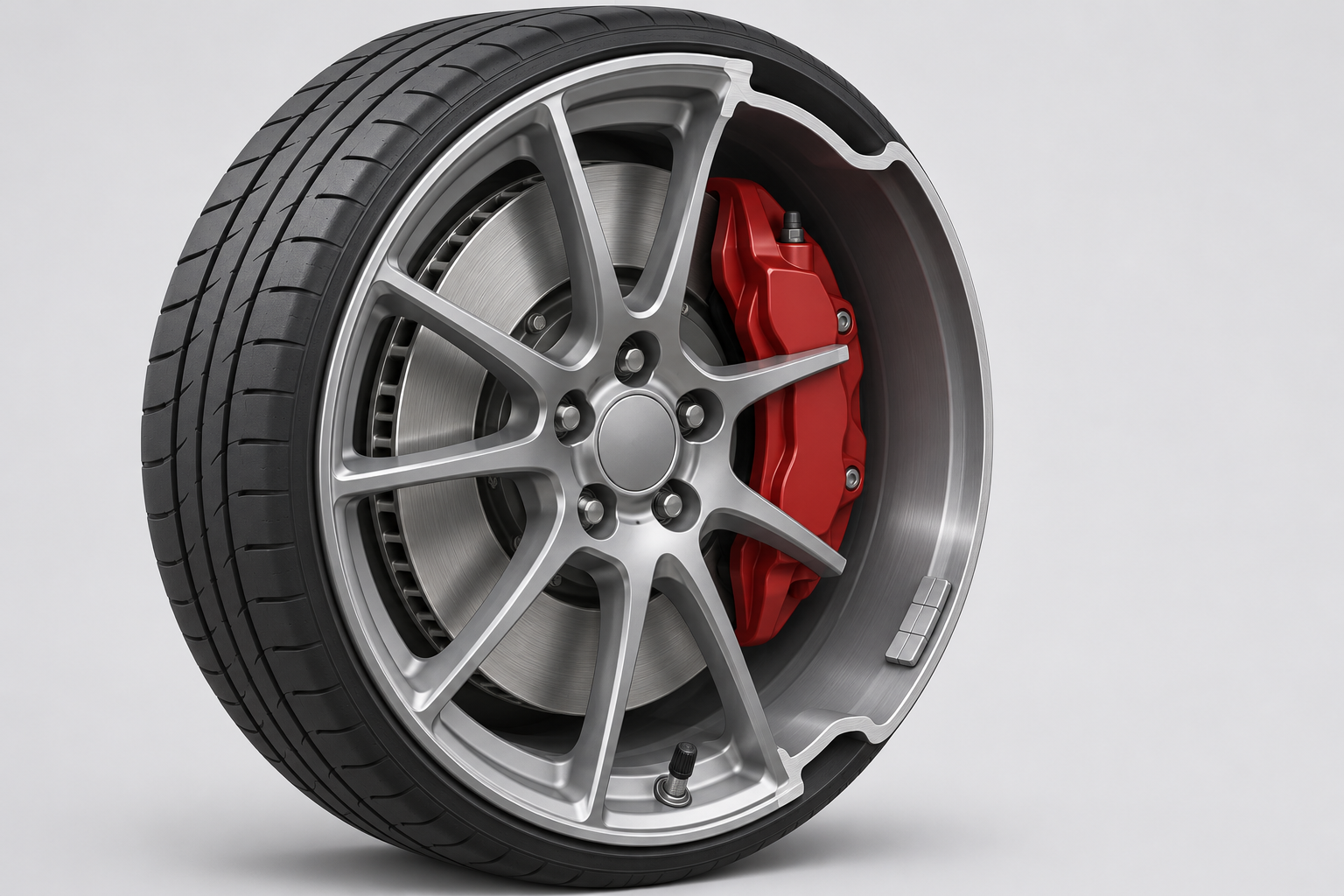
RallyRoad states that its E9X kit fits only with OEM 19-inch or larger wheels. BMW's 2011 U.S. 3 Series Sedan brochure lists 17 × 8-inch wheels as standard on the 335i Sedan. A car still wearing those standard wheels does not meet the dealer's stated condition.
Check the actual vehicle before budgeting. Factory options and later wheel changes can alter what is fitted, so confirm the wheel specification from the car and, where available, its equipment record. Then check the barrel, radios, balance weights, and valve position against a physical or printable template for the exact kit. ICOOH's wheel-fit guide explains those clearance points. Wheel diameter by itself is only the first check.
The table has no wheel price because this example has no verified quote for a compatible replacement set. If the car has 17-inch wheels, ask for an itemized estimate covering:
- four wheels that meet the kit supplier's stated requirement and pass its clearance check;
- four correctly sized tires, since the existing 17-inch tires cannot be fitted to 19-inch wheels;
- any required valve or tire-pressure monitoring parts, mounting, and balancing.
Add that estimate to the brake installation quote before comparing totals.
For this E90, a practical request to the supplier is: confirm the car's current wheel specification, provide the kit's clearance template, and identify a compatible wheel only after checking the template against the actual wheel design.
What Changes in a Single Stop and in Repeated Stops?
The factory-size performance package changes the friction pairing while keeping the original caliper and 348 × 30 mm dimensions. A different pad can change bite and temperature behavior. The package description alone gives no measured difference in stopping distance or fade resistance for this car.
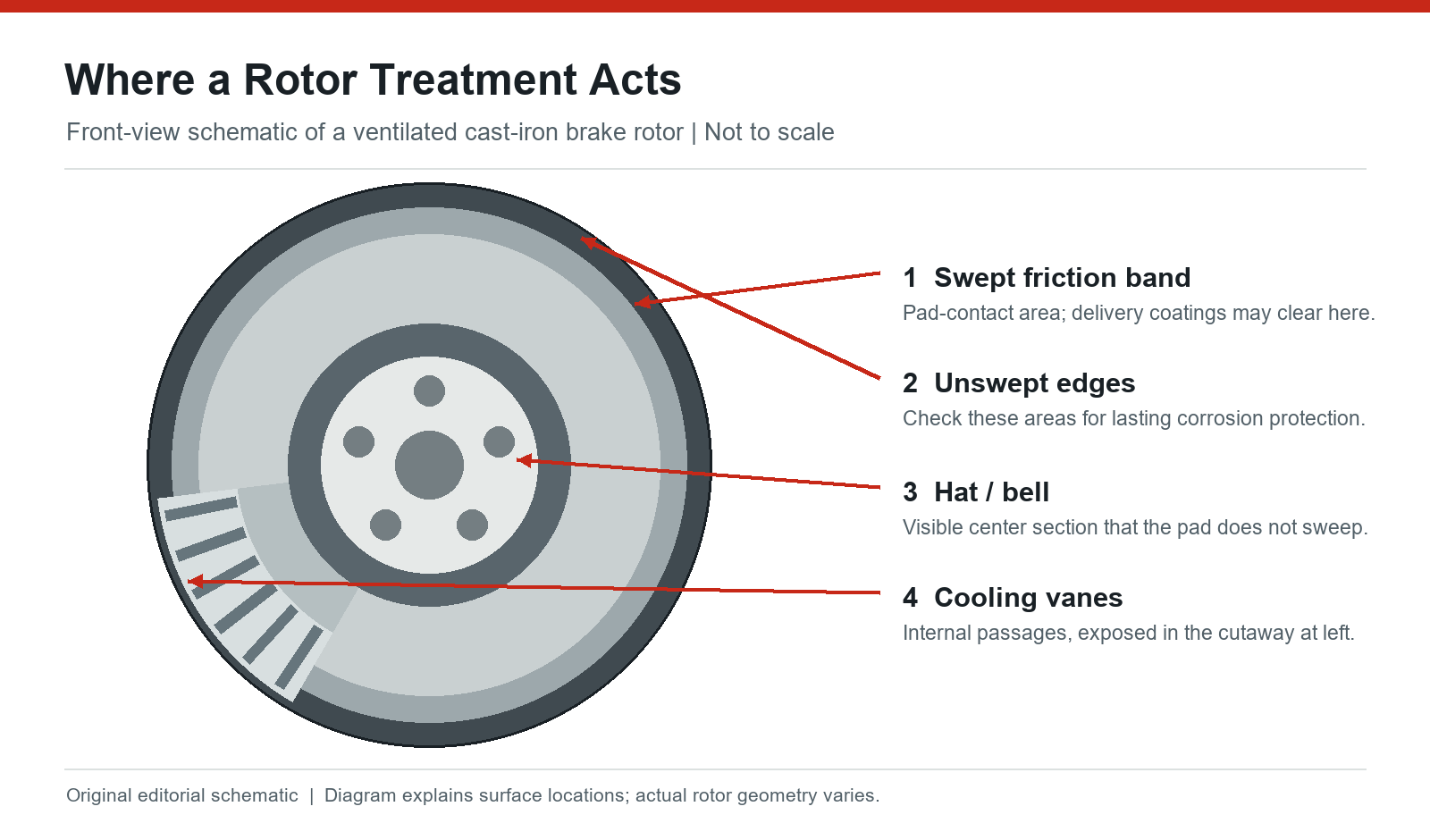
The BBK changes the rotor, calibrar, almohadilla, and hose package. Its 380 mm disc provides a different potential torque radius, while the 36 mm disc and its internal design affect the hardware available to absorb and reject heat. Rotor mass, ventilación, flujo de aire, and pad compound determine how the installed system behaves through a full session. The published dimensions describe the equipment; repeated-stop measurements would establish the result.
Brake torque is related to pad friction, clamping force, and effective pad radius, as Brembo explains. For the two stated outer diameters, 380 ÷ 348 is approximately 1.092. If effective pad radius rose by the same proportion while friction and clamping force remained constant, the radius contribution to torque would rise by roughly 9%. Actual effective radius also depends on where the pad sits and its radial height. A same-car test is needed to measure the complete kit's braking result.
Piston diameters set the IC6's total effective hydraulic area. To assess pedal response, compare that area with master-cylinder sizing and the vehicle's front-to-rear brake balance. The pad, líquido, and mechanical condition of the system also shape what the driver feels.
What to Change While Keeping the Factory Caliper
Path B is broader than the single Turner package used for the price example. Owners can retain factory-size hardware while choosing a pad, líquido, or hose service that corresponds to a documented issue:
- Braking force falls during repeated hard stops while pedal travel remains fairly steady: review the installed pad's intended temperature behavior and condition.
- Pedal travel grows or the pedal softens as the system heats: inspect for hydraulic faults and review fluid condition, grade, and service history.
- Pedal response remains elastic after the hydraulic system has been checked and bled: inspect the hoses and the rest of the hydraulic circuit.
The symptom provides a starting point for inspection. ¿Vale la pena un kit de frenos grande?? covers the fuller diagnosis; this comparison focuses on the spending paths after that inspection.
Pad temperature claims also need their exact wording. EBC's selector gives ranges for excellent wear life when operated at temperature: 0–550°C for Bluestuff, 100–750°C for RP-1, and 0–750°C for RP-X. Even two track-oriented compounds have different stated lower bounds. The range is a wear-life statement; assess cold response and road approval from the specification for the exact pad and market.
Fluid service has a practical interval. FMVSS 116 sets minimum dry and wet equilibrium reflux boiling points for DOT 4 fluid at 230°C and 155°C. Those category minimums do not describe the fluid currently in a particular vehicle. Brembo recommends a change roughly every two to three years, subject to the vehicle maker's specified interval and fluid. If the history is unknown, check the system and use the vehicle's required specification.
Track Days and Brake Tests
Para uso en pista, record what happens over consecutive laps. Note the braking zone, pedal travel, effort needed for similar slowing, and whether the behavior changes as the session proceeds. Pad suitability, condición del fluido, and available cooling are worth checking before replacing the assembly. If performance continues to deteriorate with those areas in order, the remaining system capacity deserves closer measurement.
When reading a published test, check three things: the exact rotor, pad and caliper fitted; the speed, intervals and cooling conditions; and results from the first stop through the hot stops. Temperature paired with pressure or pedal force and deceleration tells more than a peak temperature on its own.
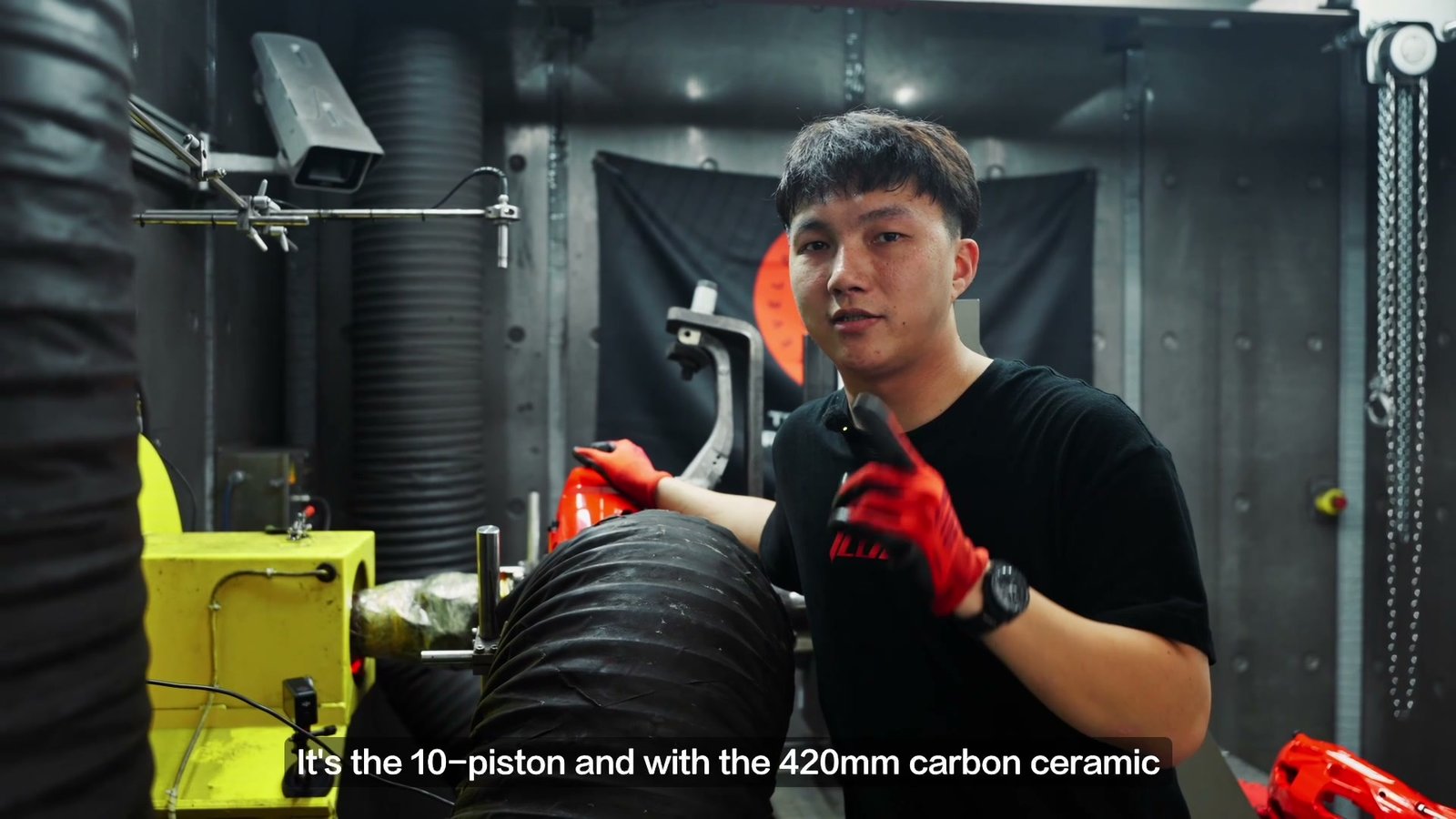
ICOOH's IC6 dynamometer article documents an IC6 caliper with a 380 × 34 mm carbon-ceramic disc and CS450 pads. The E90 retail kit in the table lists 380 × 36 mm two-piece floating discs and street-compound pads; its listing does not identify the friction-ring material. The dyno article shows a repeated-stop pressure trend for its tested assembly. An E90 comparison would need its own matched test.
Common Questions
Will a 380 mm BBK shorten an emergency stop?
No necesariamente. A tire-limited stop is unlikely to get shorter from additional brake torque; a system that cannot produce enough usable torque may improve. The roughly 9% radius illustration cannot predict the distance. Measure it on the same car and tires under comparable conditions, with several runs for each setup.
Are stock brakes enough for a track day?
Often, Sí. If braking zones and pedal behavior remain repeatable through your sessions, keep maintaining and monitoring the current system. If performance changes as temperatures rise, inspect the pads, líquido, and cooling, then measure the remaining limitation before choosing larger hardware.
Do six pistons guarantee stronger braking?
Piston count alone does not set clamping force. Total piston area, presión hidráulica, pad friction, and effective rotor radius all contribute. The finished setup also has to suit the vehicle's front-to-rear brake balance.
Will the BBK be noisier or dustier?
Ask for the exact supplied pad compound. Noise and dust behavior follow the friction material and its operating conditions, so compare pad specifications and replacement costs for the kit being considered.
The Decision
Keep factory-size hardware when it meets the demands of the driving you actually do. Address a demonstrated pad or fluid limit with the relevant service. Consider a BBK when the maintained system still needs greater repeated-use capacity, then price the complete installation around the vehicle's real wheels and replacement parts.
For the fitment step, usar ICOOH's wheel-clearance guide alongside the exact kit specifications.