
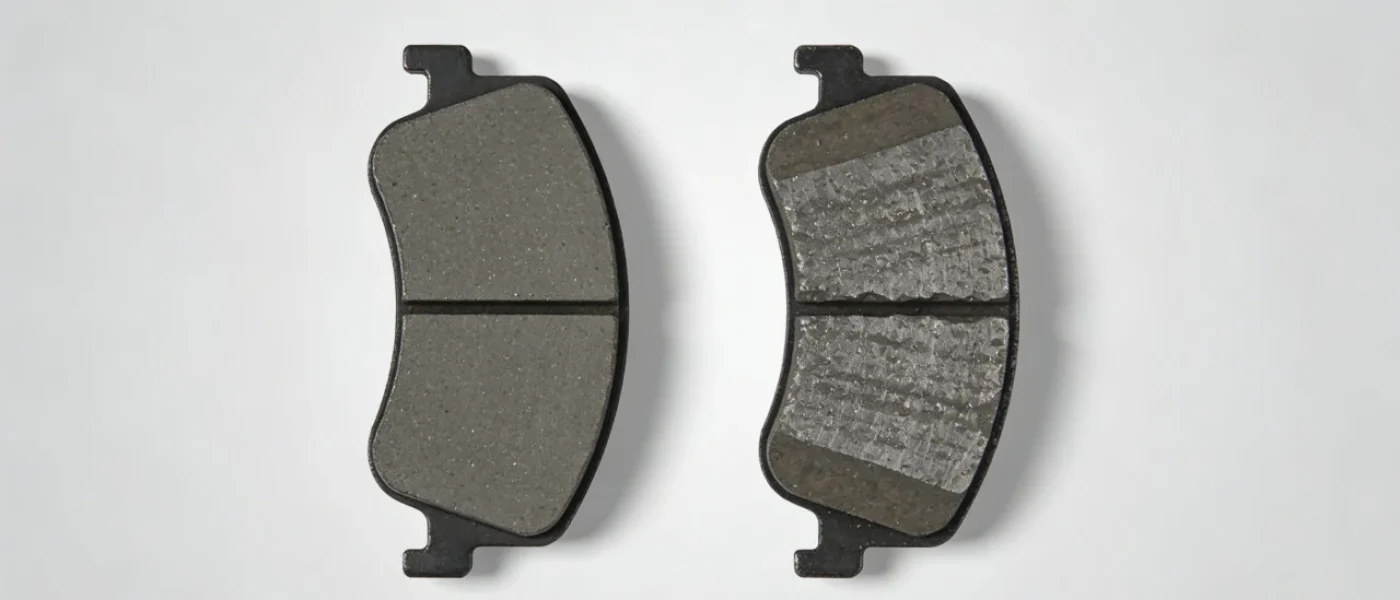
วิธีที่มีประสิทธิภาพที่สุดในการตรวจสอบผ้าเบรกคือการตรวจสอบวัสดุเสียดสีด้วยสายตาอย่างระมัดระวัง. ในยานพาหนะหลายคัน, คุณสามารถทำการตรวจสอบขั้นพื้นฐานได้โดยไม่ต้องถอดล้อ.
จอดรถของคุณบนพื้นผิวเรียบและมองผ่านช่องว่างระหว่างซี่ล้อ. คุณควรจะมองเห็นจานเบรกได้ (แผ่นดิสก์) และคาลิเปอร์เบรกที่หุ้มผ้าอิเล็กโทรด. วัสดุเสียดทานคือชั้นที่กดระหว่างแผ่นรองโลหะและโรเตอร์.
เพื่อเป็นแนวทางทั่วไป:
หากความหนาของผ้าเบรกปรากฏน้อยกว่า 1/4 นิ้ว (ประมาณ 6.4 มม), คุณควรเริ่มวางแผนการเปลี่ยนใหม่.
ความหนาที่ปลอดภัยขั้นต่ำสุดที่แน่นอนคือ 1/8 นิ้ว (3 มม).
ผ้าเบรกประสิทธิภาพสูงหลายตัวมีช่องตรงกลางที่ออกแบบมาเพื่อกระจายความร้อน. ถ้าสล็อตนี้ใกล้จะหมดแล้ว, แผ่นอิเล็กโทรดใกล้จะสิ้นสุดอายุการใช้งานแล้ว.
การตรวจสอบความหนาของผ้าเบรกเป็นประจำจะช่วยป้องกันการสัมผัส “โลหะกับโลหะ” ที่เป็นอันตราย, ซึ่งสามารถสร้างความเสียหายให้กับโรเตอร์ที่มีราคาแพง และลดประสิทธิภาพการหยุดลงอย่างมากในระหว่างการเบรกฉุกเฉิน.

2. การตีความสัญญาณเตือนด้วยเสียงและการตอบรับทางกลไก
รถของคุณได้รับการออกแบบมาให้มีสัญญาณเตือนล่วงหน้าเมื่อผ้าเบรกสึก.
เสียงแหลมหรือเสียงร้องเจี๊ยก ๆ
ผ้าเบรกส่วนใหญ่จะมีตัวแสดงการสึกหรอของโลหะเล็กๆ. เมื่อวัสดุเสียดสีบางลง, ตัวบ่งชี้นี้จะติดต่อกับโรเตอร์และสร้างเสียงแหลมสูง. เสียงนี้เป็นการจงใจและเป็นการเตือนล่วงหน้า.
เสียงบด
หากเสียงเริ่มรุนแรง, เป็นจังหวะ, หรือการบด, วัสดุเสียดสีน่าจะสึกหรอจนหมด. ในขั้นตอนนี้, แผ่นโลหะรองสัมผัสกับโรเตอร์, ซึ่งอาจทำให้เกิดร่องลึกและโรเตอร์เสียหายอย่างรุนแรง.
การสั่นสะเทือนหรือการเต้นเป็นจังหวะ
หากคุณรู้สึกถึงแรงสั่นสะเทือนที่แป้นเบรกหรือพวงมาลัยขณะเบรก, ผ้าเบรกที่สึกอาจทำให้การกระจายความร้อนไม่สม่ำเสมอ, ส่งผลให้โรเตอร์บิดเบี้ยว. เงื่อนไขนี้ต้องมีการตรวจสอบโดยทันที.
แป้นเบรกเป็นรูพรุน
แป้นเบรกที่อ่อนหรือจมสามารถบ่งบอกถึงอากาศในสายเบรกหรือการสึกหรอที่ไม่สม่ำเสมออย่างรุนแรง. ปัญหานี้ส่งผลต่อแรงดันเบรก และควรได้รับการแก้ไขทันที.
การตระหนักถึงอาการเหล่านี้ตั้งแต่เนิ่นๆ สามารถป้องกันไม่ให้การสึกหรอของเบรกเล็กน้อยลุกลามจนกลายเป็นค่าซ่อมที่มีค่าใช้จ่ายสูง.
3. การตรวจสอบน้ำมันเบรกและฮาร์ดแวร์: สิ่งที่นักขับหลายคนมองข้าม
ในขณะที่การตรวจสอบความหนาของผ้าเบรกถือเป็นสิ่งสำคัญ, การตรวจสอบเบรกที่สมบูรณ์ควรรวมถึงส่วนประกอบโดยรอบด้วย.
ตรวจสอบการรั่วไหลของของเหลว
ตรวจสอบคาลิเปอร์เบรกเพื่อดูสัญญาณการรั่วไหลของของเหลว. ลักษณะที่ชื้นหรือมันรอบๆ บริเวณลูกสูบอาจบ่งชี้ว่าซีลชำรุด. การปนเปื้อนของน้ำมันเบรกอาจลดประสิทธิภาพในการเบรกและทำให้ผ้าเบรกเสียหายได้.
ตรวจสอบสายเบรก
ตรวจสอบสายเบรกยางว่ามีรอยแตกร้าวหรือไม่, นูน, หรือการเสื่อมสภาพ. เมื่อเวลาผ่านไป, ความร้อนและเศษถนนอาจทำให้ส่วนประกอบเหล่านี้อ่อนแอลง, อาจส่งผลให้เบรกลากหรือปล่อยล่าช้า.
ประเมินฟังก์ชันคาลิปเปอร์
การติดหมุดยึดคาลิเปอร์อาจทำให้ผ้าเบรกสึกไม่สม่ำเสมอ. หากด้านหนึ่งของแผ่นรองบางกว่าอีกด้านหนึ่งมาก, การเคลื่อนไหวของคาลิปเปอร์อาจถูกจำกัด.
ประเมินสภาพน้ำมันเบรก
น้ำมันเบรกควรปรากฏเป็นสีใสหรือเป็นสีเหลืองอ่อน. หากเป็นสีน้ำตาลเข้มหรือเป็นโคลน, มันอาจจะปนเปื้อนและจำเป็นต้องเปลี่ยนใหม่. น้ำมันเบรกที่สะอาดถือเป็นสิ่งสำคัญในการรักษาประสิทธิภาพการเบรกแบบไฮดรอลิก.
แม้ว่าแผ่นรองของคุณจะมีความหนาเพียงพอก็ตาม, ฮาร์ดแวร์ที่ถูกบุกรุกสามารถลดกำลังในการหยุดและความปลอดภัยโดยรวมได้.
คำถามที่พบบ่อย
ไตรมาสที่ 1:ฉันควรตรวจสอบผ้าเบรกบ่อยแค่ไหน?
ก:แนะนำให้ตรวจสอบผ้าเบรกทุกครั้ง 6 เดือนหรือทุกๆ 5,000–7,000 ไมล์, โดยทั่วไประหว่างการเปลี่ยนถ่ายน้ำมันเครื่องหรือการหมุนยาง.
ไตรมาสที่ 2:ความหนาของผ้าเบรกขั้นต่ำคือเท่าใดเพื่อการขับขี่ที่ปลอดภัย?
ก:คุณควรเปลี่ยนผ้าเบรกทันทีเมื่อวัสดุเสียดสีถึง 3 มม (1/8 นิ้ว). การขับขี่ที่ต่ำกว่าระดับนี้จะลดความน่าเชื่อถือในการหยุดลงอย่างมาก.
ไตรมาสที่ 3:สภาพอากาศอาจส่งผลต่อเสียงเบรกได้?
ก:ใช่. ความชื้นหรือสนิมบนพื้นผิวเล็กน้อยบนโรเตอร์อาจทำให้เกิดเสียงแหลมชั่วคราวในตอนเช้า. อย่างไรก็ตาม, เสียงดังอย่างต่อเนื่องตลอดการขับขี่มักบ่งชี้ว่าผ้าเบรกสึก.
ไตรมาสที่ 4:ฉันจำเป็นต้องเปลี่ยนผ้าเบรกทั้งสี่ชิ้นในคราวเดียวหรือไม่?
ก:ควรเปลี่ยนผ้าเบรกเป็นคู่เพลาเสมอ (ทั้งด้านหน้าหรือด้านหลังทั้งสอง). การเปลี่ยนเพียงด้านเดียวอาจทำให้แรงเบรกไม่สม่ำเสมอและทำให้รถไม่มั่นคง.
บทสรุป
การทำความเข้าใจวิธีตรวจสอบผ้าเบรกเป็นทักษะสำคัญที่ช่วยปกป้องทั้งความปลอดภัยและกระเป๋าสตางค์ของคุณ. โดยการระบุตัวบ่งชี้การสึกหรอทางสายตา, การฟังเสียงเตือน, และประเมินส่วนประกอบของระบบเบรกตั้งแต่เนิ่นๆ, คุณสามารถป้องกันไม่ให้ปัญหาการบำรุงรักษาเล็กน้อยกลายเป็นความล้มเหลวทางกลไกร้ายแรงได้.
ผ้าเบรกของคุณคือหัวใจสำคัญของระบบความปลอดภัยของรถ. การตรวจสอบความหนาของแผ่นเป็นประจำ, สภาพฮาร์ดแวร์, และความสมบูรณ์ของไฮดรอลิกช่วยให้มั่นใจได้ถึงประสิทธิภาพการหยุดที่เชื่อถือได้เมื่อจำเป็นที่สุด.
การตรวจสอบเป็นประจำไม่ได้เป็นเพียงการบำรุงรักษายานพาหนะ แต่ยังเป็นความมุ่งมั่นต่อความปลอดภัยทางถนนและความอุ่นใจ.