
ใช่, you can sometimes replace carbon ceramic rotors while keeping the existing calipers. Whether you can keep the pads, rotor hats, and connecting hardware is a separate decision. And if by “only the rotors” you mean buying bare carbon ceramic friction rings, the installed rotor must specifically support that form of replacement.
Start with the reason for replacement, then identify the brakes actually on the car. Those two answers determine whether you need a complete rotor assembly, a serviceable friction ring, or additional parts alongside the rotor.
Do Your Carbon Ceramic Rotors Actually Need Replacement?
Before comparing parts, ask the workshop what finding led to the recommendation. A visible mark, unusual sound, or mileage estimate is not a universal replacement threshold. The applicable vehicle or rotor service procedure determines how wear and damage are assessed. BMW’s 2013 M carbon ceramic training material, written for the optional system introduced on the M6 and later planned for the F10 M5, describes wear indicators, minimum rotor weight and thickness, and damage assessment. Those criteria describe that BMW design; current repair instructions and limits must be checked for the exact car. แหล่งที่มา: BMW M Carbon Ceramic Brake System training manual, archived copy
Appearance needs context. The same BMW document calls the visible crack-like pattern formed in its friction coating during cooling a “relaxed microstructure” and describes it as normal for that disc. A new chip, impact, or other suspected damage still needs the applicable inspection; a photograph alone cannot establish remaining service life. Ask the workshop: Which rotor was checked, against which current limit or damage criterion, and what was found on the other side of the axle? แหล่งที่มา: BMW M Carbon Ceramic Brake System training manual, archived copy
Noise is similarly inconclusive on its own. In a Porsche technical bulletin for specified PCCB vehicles and noise complaints, technicians are directed to classify the noise and inspect disc wear before deciding on replacement. It is guidance for the vehicles and symptoms named in that bulletin, not a general Porsche or carbon ceramic rule. แหล่งที่มา: Porsche technical information
Can a carbon ceramic rotor be repaired or resurfaced?
Repair or resurfacing requires a procedure approved for the particular disc and its condition. The BMW training document prohibits machining the friction surfaces of the M system it describes. That instruction cannot be generalized to every carbon ceramic product. แหล่งที่มา: BMW M Carbon Ceramic Brake System training manual, archived copy
If the inspection shows the rotor is within its service criteria, there is no rotor order to place. If the finding is uncertain, complete the specified inspection first. Once replacement is confirmed, identify the parts that can stay.
Identify the Brake System You Have Now
The current brake configuration matters more than the badge on the trunk. If the vehicle left the factory with carbon ceramic brakes, identify the factory brake option, front or rear axle, and existing rotor part numbers or markings. Model and year alone may leave several brake options unresolved.
If an aftermarket kit was installed, the factory parts catalog may describe brakes that are no longer on the car. Look for the kit invoice or the part number on the rotor hat; photograph the full rotor face, ring-to-hat joint, caliper and its markings, and any adapter bracket. For a rear rotor, include the hat and parking-brake arrangement if visible. When markings cannot be seen with the wheel in place, ask a qualified workshop to document them during inspection. The hat part number, รุ่นคาลิปเปอร์, and mounting arrangement can point the supplier to the right fitment drawing; an owner-measured outside diameter alone cannot identify those interfaces.
Keep a second question separate: What part are you trying to buy? The answer could be a complete rotor assembly, a replacement friction ring, a custom complete rotor, or a custom ring. “Custom” describes the supply route; it does not identify the brake system. A custom replacement may be considered for either a factory or a modified system, provided fitment is verified against the installed parts.
If the vehicle currently has iron brakes and you want to move to carbon ceramic, that is a conversion project with a different scope. For broader system context, see our Carbon Ceramic Brake Disc guide.
Complete Rotor Assembly or Friction Ring: What Can Be Replaced Separately?
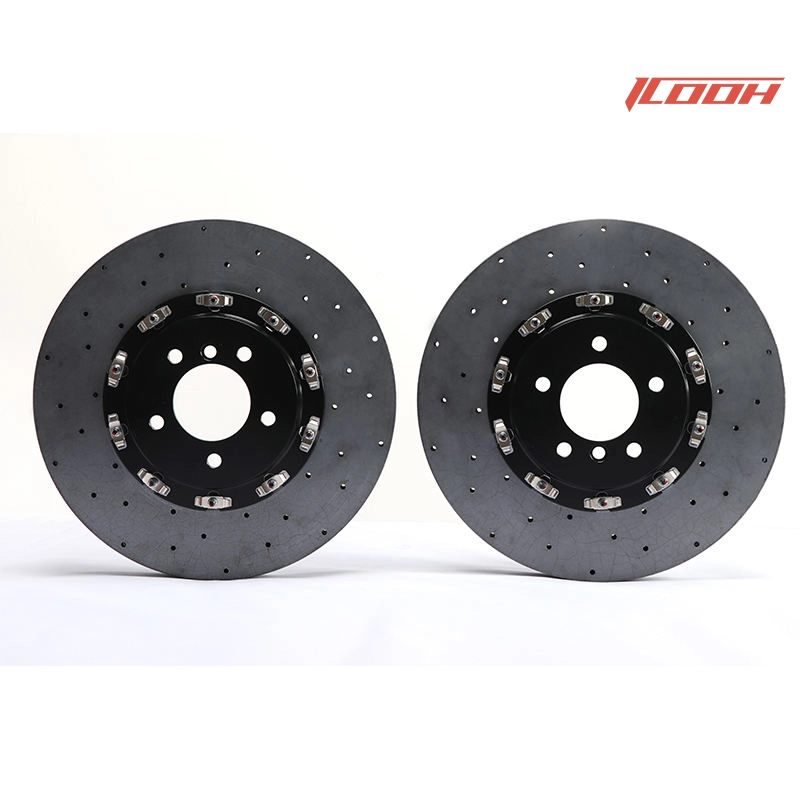
In a two-piece design, ที่ friction ring carries the braking surfaces and the rotor hat (sometimes called a bell) mounts the ring to the vehicle hub. Their connection transfers braking loads. Whether the joint is fixed or permits controlled movement, and in which direction and range, depends on that rotor’s design. For this design, ก complete rotor assembly is supplied as a matched ring-and-hat unit. A ring-only order means the existing hat, required hardware, and assembly process must be confirmed separately.
The braking surface. A ring-only order is possible only when this rotor design supports a separately replaceable ring.
Specified fasteners and joint geometry connect the ring to the hat. The joint may have a product-specific movement allowance.
The center part connects the rotor to the hub. Its bore, รูปแบบสายฟ้า, height, and condition must suit the assembly.
Ring, specified connection, and hat supplied as the stated unit. Confirm included mounting hardware, แกน, and side.
The existing hat remains only if the product and its condition allow it. Confirm interface, fasteners, assembly procedure, and inspection.
A two-piece appearance does not guarantee ring-only service
BMW’s 2013 M carbon ceramic training document illustrates the distinction. Its disc has a visible ring-to-hat connection, yet BMW instructs technicians never to loosen, remove, or tighten those connection bolts. For that system, a bolted joint is part of the supplied assembly, not an invitation to order a bare ring. Confirm the current repair instruction for the exact BMW application before any work. แหล่งที่มา: BMW M Carbon Ceramic Brake System training manual, archived copy
There are genuine carbon ceramic disc-only offers. ตัวอย่างเช่น, CTE Carbon Composites advertises a carbon ceramic disc without a bell and says it supplies its specified fasteners and a technical drawing. That establishes a ring-only supply option. The public page does not establish that a customer’s existing OEM hat accepts the ring, or provide an inspection and assembly release for that particular hat. Those are the questions to settle before ordering. แหล่งที่มา: CTE product specification, cited for supply scope only
For a supported ring-only repair, the technical file needs the exact hat reference, ring-to-hat hole geometry, joint design, specified hardware, and permitted movement, if any. The old hat also needs a defined inspection standard. The supplier and installer must agree on who assembles and checks the finished rotor. A diameter match cannot resolve these details. A custom ring calls for a controlled drawing and written assembly plan for the retained hat or a new, matching hat.
Purchase
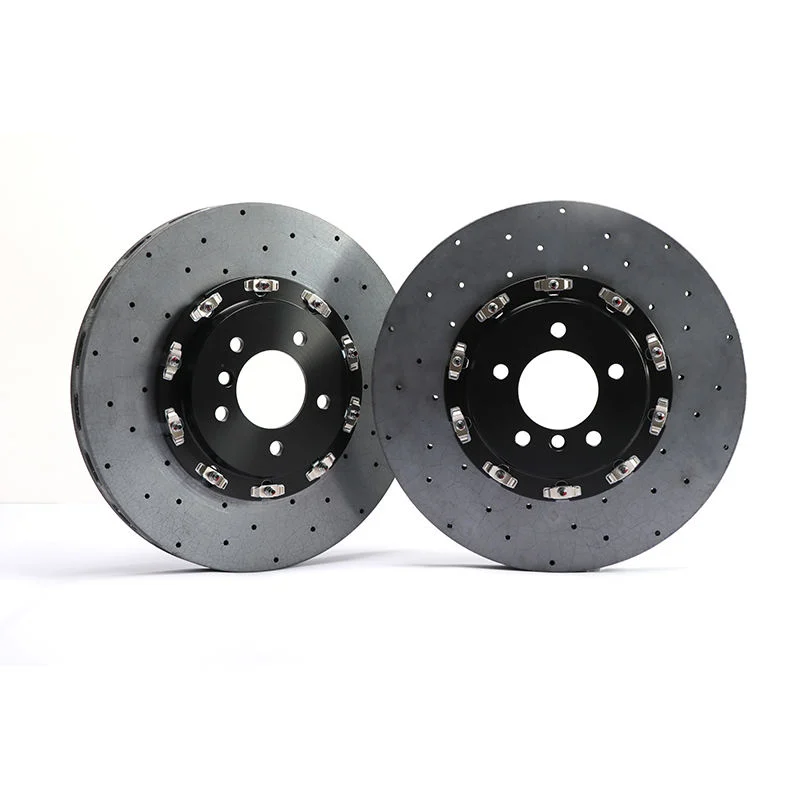

A custom ring can reproduce dimensions yet still require a different hat or connection design. Before comparing its price with a complete assembly, have the supplier state what has been validated and which parts of the finished rotor remain to be engineered or inspected.
Which Existing Brake Components Can You Keep?
The cost of the repair depends largely on what can remain on the car. Evaluate each component against the proposed rotor and the applicable service instructions.
Calipers and brackets: can they stay?
Existing calipers and brackets can remain when the replacement rotor is approved for their actual installed arrangement and both parts pass inspection. On a modified car, verify the caliper and bracket identities rather than relying on the original vehicle catalog.
Diameter sets the ring’s radial reach into the caliper; thickness and axial position affect where it sits between the pads. A different diameter may require a different caliper bracket. Disc thickness affects the space available for the specified pads and the pistons’ operating position. Mounting offset places the disc axially within the caliper and affects clearance on each side. The workshop should confirm clearance and pad sweep using the identified rotor, คาลิปเปอร์, and bracket, including wheel clearance where a change affects it.
ผ้าเบรก: two different reuse decisions
Start with geometric fit: the backing plate must fit the caliper; pad thickness must suit the rotor thickness and caliper’s operating range; and the pad’s friction face must sweep the intended track without overhanging an edge or leaving an unintended contact pattern. The ring’s outside diameter and friction-track width matter here. BMW’s training document gives a concrete example: on the M system it described, the rear caliper and pad outline were shared with the M Compound arrangement, but the thicker carbon ceramic disc required thinner pads. An apparently familiar caliper therefore did not make the pads interchangeable. แหล่งที่มา: BMW M Carbon Ceramic Brake System training manual, archived copy
Then check friction pairing: the pad compound and its intended operating conditions must be approved for the proposed carbon ceramic surface. Two pads with the same backing plate can have different friction materials and temperature behavior. Finally, inspect the particular used pads for remaining material, การสึกหรอไม่สม่ำเสมอ, ความเสียหาย, glazing or contamination, and follow any instruction requiring new pads with a new disc. See our brake pad compound guide for the broader material distinction; the exact rotor-and-pad approval still governs this repair.
ตัวอย่างเช่น, Porsche’s 2020 WLG1 campaign covered specified vehicles whose discs had been installed on the wrong side or were otherwise incorrect. Its affected scopes included PCCB-equipped 911 Carrera 4S cars; the campaign called for discs and pads on each affected axle, plus listed installation parts. That scope applies only to vehicles assigned to the campaign. แหล่งที่มา: Porsche workshop campaign
หลังการติดตั้ง, ask which bedding and functional checks apply to the new rotor-and-pad combination. Do not assume that a familiar procedure for iron rotors applies. BMW’s published brake guidance, ตัวอย่างเช่น, calls for a break-in process after fitting new pads to the M carbon ceramic system it covers. Follow the instructions for your own vehicle and parts rather than borrowing its distances or steps. แหล่งที่มา: BMW service information
Rotor hats and connecting hardware: can they be reused?
Once a ring has been confirmed for the identified hat, ที่ existing hat must still pass inspection. The installer should examine its connection points and hub-mounting face for damage, distortion, การกัดกร่อน, or wear under the applicable procedure. A hat that fails inspection changes the quote: it needs a matching replacement or a complete rotor assembly.
Keep the hardware categories separate. Ring-to-hat fasteners join the two rotor components. At the hub, the vehicle may use one or more rotor-retaining screws, rely on the specified wheel bolts or nuts to clamp the rotor hat to the hub, or use both arrangements. Ask which installation parts are included and which must be renewed. A Bentley campaign on specified Continental vehicles required replacement of particular ceramic disc-to-bell bolts; that instruction belongs to those affected vehicles and illustrates why fastener reuse must follow the actual procedure. แหล่งที่มา: Bentley recall repair instructions
For a ring-only purchase, have the supplier and workshop agree who assembles the ring to the hat and signs off the completed rotor. That labor, any new hardware, and a rejected old hat can materially change the final cost.
What Must Match on a Replacement Carbon Ceramic Rotor?
The replacement must sit in the correct position between the existing pads, mount to the correct hub and hat, and meet the specified front or rear and left or right application. This is a connected set of dimensions and interfaces, not a single diameter check.
Dimensions must work together
Compare the proposed rotor with the original assembly or an approved application drawing:
| Dimension or interface | Why it matters to the installed brake |
|---|---|
| Outside diameter | Sets the outer radius reached by the caliper and pad; a change can require different bracket geometry. |
| Nominal thickness | Must fit the caliper and specified pad thickness while leaving the intended operating clearance. |
| Overall height | Describes the assembly’s total axial dimension between the datum surfaces defined on the product drawing; confirm those surfaces before comparing two quotations. |
| Hat height | Describes the hat’s own axial geometry. Its measurement points depend on the manufacturer’s drawing and should not be assumed to match overall height. |
| Mounting offset | Locates the friction ring relative to the hub mounting face; it governs where the ring sits between the pads. It is related to, but not interchangeable with, overall height. |
| Center bore | Must match the hub’s center feature and the centering method specified for that application. |
| Hat-to-hub bolt pattern and mounting face | Must match the vehicle’s mounting holes and contact face; the mounting face also establishes the axial reference for the installed rotor. |
| Ring-to-hat connection pattern | Determines whether a separate ring can mate with the particular hat and specified connecting hardware. This is a different interface from the hat-to-hub pattern. |
| Friction-track width and location | Must correspond to the pad’s swept area so the friction material contacts the intended surface. |
- Outside diameter and friction-track width must work with the pad’s swept area and caliper position.
- Center bore and hat-to-hub bolt circle locate the rotor on the vehicle hub.
- The separate ring-to-hat joint circle matters when a friction ring is supplied without a hat.
- Nominal thickness must suit the caliper’s accepted rotor range.
- Overall height and mounting offset place the friction ring between the caliper’s pads.
- Hat height and the stated measurement datum must match the product drawing.
A rotor can share outside diameter and hub bolt pattern with the old one yet sit too far inboard for the caliper. ในทำนองเดียวกัน, a pad that fits the caliper may overhang a narrower friction track. The supplier and installer should resolve those relationships from the part numbers and drawings; ask them which measurements remain unconfirmed before anyone orders a custom part.
On the rear axle, the parking brake may interact with the rotor hat. Its fit therefore belongs in the application drawing and installation review.
Friction pairing and application matter too
Confirm front or rear application, left or right side, and any direction arrow on the actual part. Directional cooling or a handed mounting design can make two otherwise similar rotors different parts. Use the markings and application drawing to match each position, then verify the specified pad pairing described above.
If the replacement changes material specification, ขนาด, hat interface, ตำแหน่งคาลิปเปอร์, or pad pairing from the current arrangement, ask for the affected parts to be checked again. At that point, “same size rotor” is no longer a complete description of the change.
Should You Replace One Rotor, an Axle Pair, or Both Axles?
Single-side replacement can be reasonable only when the applicable procedure permits it and the opposite rotor passes inspection. Some procedures instead specify an axle pair. A pair is also needed when the other rotor independently meets its replacement criterion, even if there is no blanket pair rule. The way a retailer packs the product does not decide the repair scope.
The workshop should document the replacement decision for each rotor position: damage or wear found on that rotor, a stated pair-replacement requirement, or an inspection result that allows the other side to remain. Front and rear axles are separate decisions.
If a workshop recommends an axle pair despite a procedure that permits one side, the recommendation should identify its technical basis and the condition of the opposite rotor and pads. That lets the owner distinguish a service requirement from an optional recommendation.
How Do You Confirm Fitment and Compare Quotes Before Ordering?
Start with the vehicle make, แบบอย่าง, ปี, VIN or brake option where available; the aftermarket brake kit model and component part numbers, if applicable; the affected axle and side; and the existing rotor and caliper markings. Say whether you want a complete assembly or are investigating a bare ring. For a custom part, the supplier can identify which controlled drawing, การวัด, or sample the workshop needs to provide.
Ask for a written proposal for the installed brake system. It should name the rotor or ring part number, แกน, side and quantity; included hat and hardware; ข้อมูลจำเพาะของแผ่น; parts approved to remain; parts requiring inspection; assembly and installation responsibility; and the applicable bedding instructions. If the supplier cannot confirm one of these items, the proposal should say what evidence will resolve it.
Two quotes headed “carbon ceramic rotor replacement” may have very different totals because they include different work:
| Quote says | Check what the price covers |
|---|---|
| Friction ring only | Hat inspection and reuse decision, specified connecting hardware, ring-to-hat assembly, แผ่นอิเล็กโทรด, and installation. |
| Complete rotor assembly | Whether the hat and connection are supplied as a unit, plus pads, ฮาร์ดแวร์สำหรับติดตั้ง, การติดตั้ง, and checks. |
| Axle set or full-car package | Exact number and positions of rotors, whether pads and hardware are included, and whether all quoted positions actually need replacement. |
A bare ring can look cheaper until hat inspection, connecting hardware, assembly labor, and pads are added. Compare the itemized completed repair for the same axle positions, not only the part price on the first line of each quote.
The Replacement Decision to Take Away
ก่อนทำการสั่งซื้อ, your workshop and supplier should be able to place the repair in one of four outcomes:
- 01Inspection first: The need for replacement or the installed brake configuration is still uncertain.
- 02Complete rotor replacement: The compatible assembly is identified, and the pad and hardware requirements are clear.
- 03Friction ring replacement: The specific rotor supports this service route, the existing hat is suitable, and the connection, ฮาร์ดแวร์, and assembly plan are documented.
- 04Rotor plus additional components: แผ่นรอง, hats, or installation parts must be replaced or included to make the proposed repair complete.
If the findings support only a rotor change, keeping serviceable calipers is entirely possible. Keeping pads or the hat requires separate approval; buying only a friction ring requires a serviceable rotor design and a defined assembly route.
Technical references
Documents and product information cited in the article. Apply service instructions only to the vehicles and components they cover.
M Carbon Ceramic Brake System training manual
Wear criteria, surface appearance, ring-to-hat joint and pad geometry.
BMW-authored document, accessible archiveTechnical Information 122/20
Noise classification and inspection for the vehicles named in the bulletin.
Technical bulletinWorkshop Campaign WLG1
Specified affected-axle disc, pad and installation parts.
Campaign documentRecall Campaign R790
Specified ceramic disc-to-bell connecting bolts.
Recall instructionsService Information Bulletin 34 10 19
Break-in guidance after fitting new pads to the covered M carbon ceramic system.
Service bulletinCarbon Ceramic Brakes product specification
Disc-only supply option; the page does not validate a particular existing hat.
Supplier product page, supply scope onlyNeed Help Confirming Your Brake Rotor Fitment?
Send your vehicle information and current brake system details to the ICOOH team.
To start a fitment review, submit your vehicle and brake-system details through แบบฟอร์มติดต่อของ ICOOH. Send rotor and caliper photos to info@icooh.com, or ask the team for its preferred photo-submission method. Request a written answer on retained parts, required new parts, ปริมาณ, and assembly responsibility before paying.
For photos: info@icooh.com